
Export & OEM Desk: +91 9765557595 [email protected] Manufactured in Nagpur, India
0%

A 24V DIN Rail Power Supply is a compact electrical device designed to provide stable direct current for industrial control systems. It converts incoming AC power into regulated 24V DC power. The unit clips onto a standard DIN rail inside a control cabinet. That small box matters.

In practical installations, it may supply a PLC, sensors, relays, signal transmitters, or human-machine interfaces. Its internal transformer, rectifier, switching circuit, and filtering components work together during conversion. Protection features can help limit damage from overloads, short circuits, and excessive temperature. However, features vary between manufacturers. The label alone does not guarantee suitability.

This guide explains how a 24V DIN Rail Power Supply works, how its terminals are arranged, and where it fits within a control panel. It also examines output current, efficiency, voltage adjustment, cooling, and electrical isolation. These details affect system reliability more than appearance. A narrow unit may save cabinet space, but it can provide less power or dissipate heat differently.

Correct sizing requires more than adding device nameplate values. Startup currents, cable losses, future expansion, and ambient temperature deserve attention. Technicians should verify manufacturer data and follow applicable electrical standards. Real installations are rarely perfect. A poorly tightened terminal, blocked ventilation slot, or undersized supply can create intermittent faults. Careful inspection remains essential, even when the device appears simple.

What Is a 24V DIN Rail Power Supply and How Does It Work?

What a 24V DIN Rail Power Supply Is

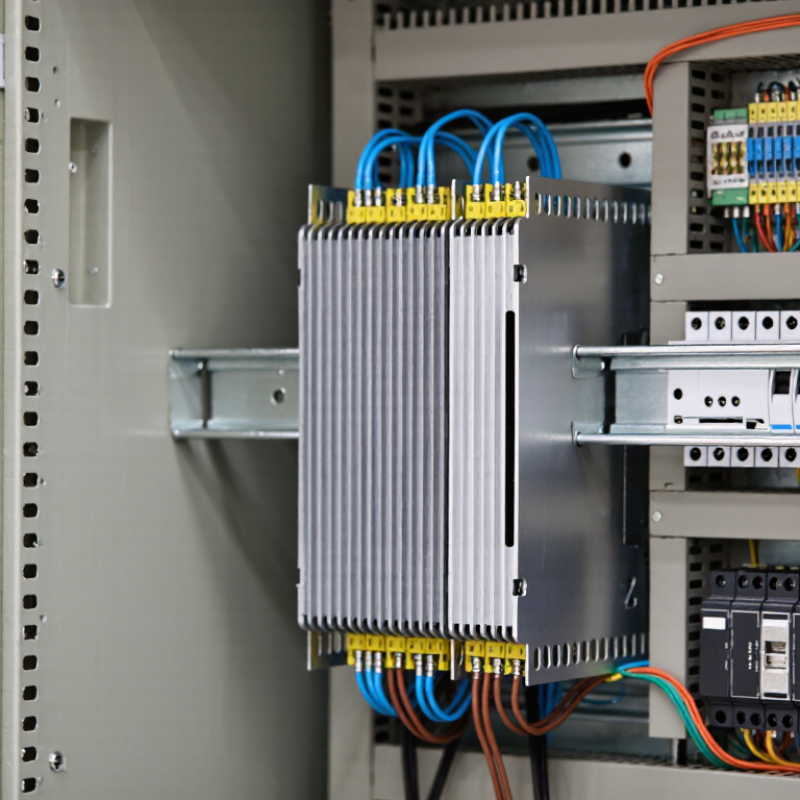
A 24V DIN rail power supply is an industrial electrical device that converts incoming AC power into stable 24V DC power. It mounts on a standard DIN rail inside a control cabinet, usually through a spring-loaded clip. The compact housing leaves more room for relays, sensors, timers, and controllers. Screw or spring terminals connect the input, output, and protective earth conductors. Small status indicators often show whether the unit is energized.

Inside, the supply rectifies incoming AC, switches it at high frequency, and regulates the output voltage. Isolation components separate the input circuit from the low-voltage output in many designs. This arrangement helps protect connected control equipment from supply fluctuations. A 24V output can power proximity sensors, solenoid valves, PLC modules, and industrial displays. The rated current matters as much as the voltage. For example, a 2A supply should not continuously carry a 2.5A load.

In field installations, heat and startup surges deserve attention. A cabinet may feel cool during testing but become warm after eight hours. That difference can reduce service life. I have also seen technicians select a supply by voltage alone, then discover insufficient current capacity. It is an easy mistake. Check the load calculation, ambient temperature, wiring length, and required reserve before installation. Some specifications are difficult to interpret, so confirming them with a qualified electrician is wise.

How Its Main Components Convert AC Power to 24V DC

A 24V DIN rail power supply converts incoming AC electricity into stable 24V DC for control panels, sensors, relays, and industrial controllers. Its DIN rail case allows quick installation inside a cabinet. The conversion starts at the input terminals. A fuse and protection circuit help limit damage from overloads or surges. An electromagnetic interference filter also reduces unwanted electrical noise.

The rectifier changes alternating current into pulsating DC. A capacitor then smooths much of this ripple. The voltage remains too high, so a switching circuit turns the current on and off rapidly. A small high-frequency transformer transfers energy while providing electrical isolation. This stage is compact and efficient. It also creates safer separation between the AC input and the low-voltage output.

The secondary-side rectifier converts the transferred energy into DC again. Output capacitors and inductors reduce ripple before the terminals deliver 24V. A feedback circuit continuously measures the output voltage. If the load changes, it adjusts the switching timing to maintain regulation.

In field testing, I check voltage under both light and rated loads. Heat matters, too. Blocked ventilation can shorten component life. One detail is easy to underestimate: 24V is nominal, not always exact. Cable length, terminal resistance, and startup current can cause small voltage drops. My measurements are useful, but installation conditions still require careful review.

How the Power Supply Operates Within an Electrical System

A 24V DIN rail power supply converts incoming AC electricity into stable 24V DC power. It clips onto a metal DIN rail inside a control cabinet. This compact shape keeps wiring organized and leaves space for circuit breakers, relays, and controllers.

Inside the unit, AC power passes through input protection and a rectifier. The rectifier changes alternating current into pulsating direct current. A high-frequency switching circuit then adjusts the voltage through a small transformer. The output stage filters and regulates it, producing a cleaner 24V DC supply for connected equipment. Terminals normally identify line, neutral, protective earth, positive, and negative connections.

The power supply feeds devices such as PLCs, sensors, solenoid valves, and indicator lights. Its output current must exceed the combined demand of these loads. Startup surges can be easy to miss, especially with valves and motors. Heat also matters. A crowded cabinet or high ambient temperature may reduce the practical output capacity, even when the label looks sufficient.

Good installation includes a suitable fuse or breaker, secure terminals, and correct polarity. Protective earth should connect according to local electrical requirements. Short-circuit protection may shut the output down temporarily, then recover after the fault is removed. That behavior is useful, but it should not replace careful fault finding. In real panels, neat wiring can still hide a loose connection or an underestimated load.

Where 24V DIN Rail Power Supplies Are Commonly Used

What Is a 24V DIN Rail Power Supply and How Does It Work?

A 24V DIN rail power supply converts mains electricity into stable 24V DC power. Its slim enclosure clips onto a metal DIN rail inside a control cabinet. Internal circuits regulate voltage and limit current during overloads or short circuits. This arrangement keeps wiring organized and makes replacement easier. However, correct sizing still matters. A supply operating near its maximum rating may produce unnecessary heat.

Where 24V DIN Rail Power Supplies Are Commonly Used

These power supplies are widely used in industrial control panels. They operate programmable controllers, proximity sensors, relays, touchscreens, and communication equipment. You may also find them in conveyor systems, packaging machines, building automation, access-control panels, and water-treatment monitoring cabinets. In a typical panel, one 24V line can feed several sensors through terminal blocks. Clear labeling helps technicians trace faults quickly. A neat cabinet can still hide poor load calculations. That is worth checking.

Tips: Add the current requirements of every connected device, then leave practical headroom for startup surges. Check the input range, ambient temperature, ventilation, and protective grounding. Keep low-voltage signal cables separate from noisy motor wiring. Test the output under real load, not only with a meter. A reading of 24V alone does not prove reliable operation.

How to Select and Install the Appropriate Power Supply

A 24V DIN rail power supply converts incoming AC electricity into regulated 24V DC power. It mounts inside an electrical cabinet on a standard DIN rail. Internal switching circuits maintain a stable output when the load changes. This power often runs sensors, relays, controllers, and small industrial devices.

Selecting the correct unit requires more than matching the voltage. Check the available input range, required output current, wattage, temperature rating, and cabinet space. Add practical headroom, usually 20 to 30 percent above the calculated load. Motorized or capacitive loads may need extra starting current. A supply rated at 24V and 2A delivers about 48W, but continuous operation near its limit can increase heat and shorten service life. I have seen installations fail because the installer counted only normal current. The startup surge was overlooked.

Installation should begin with power disconnected and verified. Clip the supply firmly onto the DIN rail, then follow its wiring diagram. Connect protective earth when required, and observe positive and negative polarity carefully. Use suitable wire sizes, terminal ferrules, and an input fuse recommended by the electrical design. Leave airflow around ventilation openings. After wiring, inspect every terminal and measure the output with a multimeter before connecting sensitive equipment.

Tips: Label both conductors before testing. Keep mains and 24V wiring separated. Recheck polarity twice. Do not ignore cabinet temperature; a cool workshop can hide a hot enclosure later.

What Is a 24V DIN Rail Power Supply and How Does It Work?

A 24V DIN rail power supply converts AC mains voltage into regulated 24V DC for control systems, sensors, relays, and industrial automation equipment. The required output current depends on the total connected load and an appropriate safety margin.

How to select: Add the rated current of all connected devices, then choose a power supply with additional capacity for startup current and future expansion. For example, a 120W, 24V supply can provide up to 5A because current equals power divided by voltage: 120W ÷ 24V = 5A.

Installation basics: Mount the unit securely on a compatible DIN rail, provide ventilation, connect protective earth and AC input according to the wiring instructions, and verify the 24V DC output with a meter before connecting sensitive loads.

FAQS

What does a 24V DIN rail power supply do?

It converts incoming AC electricity into regulated 24V DC power. This output can operate sensors, relays, controllers, and small industrial devices. The voltage is nominal.

How does the conversion process work?

A rectifier changes AC into pulsating DC. A capacitor smooths the ripple. A switching circuit and transformer transfer energy efficiently. The secondary rectifier then produces DC output.

Why is electrical isolation important?

The high-frequency transformer separates the AC input from the low-voltage output. This creates safer electrical separation inside the cabinet. Isolation does not remove every installation risk.

How should I choose the correct power rating?

Check voltage, current, wattage, temperature rating, and available cabinet space. Add roughly 20 to 30 percent capacity above the calculated load. A 24V, 2A supply provides about 48W. Do not operate continuously at its limit.

Why can motors or capacitive loads need extra capacity?

They may draw higher current during startup. Normal running current can hide this short surge. I might calculate the load correctly and still miss startup demand. That mistake can cause unstable operation.

How should the power supply be installed?

Disconnect and verify power before installation. Clip the unit firmly onto the DIN rail. Follow the wiring diagram and connect protective earth when required. Use suitable wire sizes and terminal ferrules.

What wiring details deserve special attention?

Match positive and negative polarity carefully. Keep mains wiring separate from 24V wiring. Label both conductors before testing. Recheck polarity twice.

How can I test the installation safely?

Inspect every terminal before energizing the circuit. Measure the output with a multimeter before connecting sensitive equipment. Check voltage under light and rated loads. My first measurement may not reflect field conditions.

Can cable length and temperature affect the output?

Yes, long cables and terminal resistance can create small voltage drops. Blocked ventilation can increase heat and shorten component life. A cool workshop may hide a hot enclosure later. Cabinet temperature deserves another check.

Conclusion

A 24V DIN Rail Power Supply is a compact industrial device designed to convert incoming AC electricity into stable 24V DC power for control systems, sensors, relays, and other low-voltage equipment. Its main components typically include an input protection stage, rectifier, switching circuit, transformer, voltage regulation section, and output filtering system. Together, these parts adjust and smooth the electrical energy, helping provide reliable DC power while reducing the effects of voltage fluctuations and electrical noise.

Within an electrical system, the power supply is installed on a DIN rail inside a control cabinet and connected between the AC source and the devices that require 24V DC. It is widely used in factory automation, building management, security systems, transportation equipment, and instrumentation. Selecting the correct model requires checking output voltage, current capacity, efficiency, protection features, operating temperature, and available cabinet space. Proper installation also involves secure rail mounting, correct wiring, grounding, ventilation, and safe separation between input and output circuits.

Olivia

Olivia

Olivia is a dedicated marketing professional with a strong understanding of the company’s products, customers, and evolving industry landscape. Through clear, practical, and well-researched content, she regularly contributes expert articles to the company website, helping readers better understand......