
Choosing a 48V Battery Backup Power Supply is not simply a matter of selecting the largest battery. The right system must match your equipment, runtime expectations, charging method, and installation environment. A network cabinet, security system, and industrial controller may all use 48 volts, yet their power demands can differ sharply.
Begin with real measurements. Record the equipment’s running watts, startup surge, and expected backup duration. Then check battery chemistry, usable capacity, battery management protection, inverter efficiency, and recharge time. A 10-minute outage needs a different design from an eight-hour emergency. Small details matter. Cable length and thickness can create voltage loss, especially under heavy loads. Confirm that the supply supports your equipment’s voltage range, connectors, grounding method, and communication requirements.
Reliability also depends on conditions outside the battery enclosure. Heat can shorten service life, while cold temperatures may reduce available capacity. Place the unit in a dry, ventilated location, and leave enough space for inspection. Look for clear specifications, documented test results, warranty coverage, and accessible technical support. These details often reveal more than a dramatic capacity claim. Do not trust a label alone. Verify the usable energy after conversion losses, not only the advertised amp-hour rating.
A practical choice should balance safety, cost, serviceability, and future expansion. I have seen backup plans fail because users estimated loads instead of measuring them. That mistake is easy to repeat. Recheck the calculation before purchase, and allow reasonable reserve capacity. No battery is perfect. Careful evaluation makes its limits manageable.
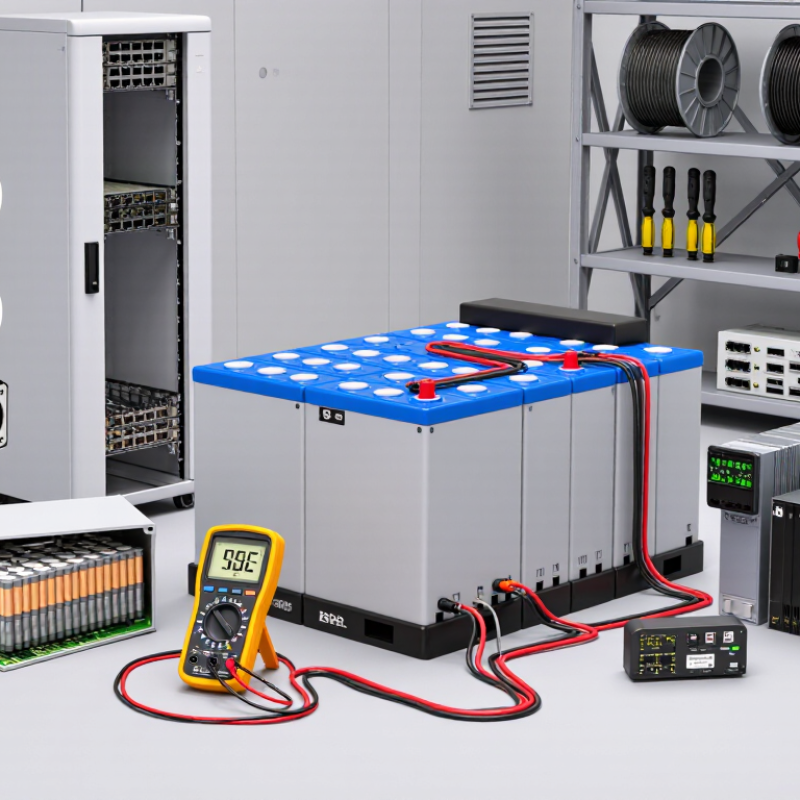
Choosing a 48V battery backup power supply starts with the load, not the battery label. List every device, including routers, controllers, and conversion losses. Measure real wattage during startup, because a server rated at 800W may briefly demand much more. Uptime Institute’s 2024 Annual Outage Analysis reported that power problems were involved in 54% of significant data-center outages. That figure makes transfer speed, overload protection, and maintenance practical requirements, not optional features.
A 48V system usually uses a battery pack with a higher charging voltage, so compatibility must be checked carefully. Calculate capacity with this formula: watt-hours = watts × backup hours. Then allow roughly 20% headroom for aging, temperature, and inverter losses. A 1,000W load needing two hours requires at least 2,000Wh before derating. The battery-management system should provide cell balancing, temperature monitoring, short-circuit protection, and low-voltage shutdown. Safety documentation should reference relevant standards, such as IEC 62619 or UL 1973, where applicable. My practical mistake was trusting nominal voltage alone; charging limits later exposed the mismatch.
Tips: Keep the battery in a cool, dry, ventilated location. Test runtime under a realistic load every few months. Record temperature and voltage trends. Do not assume a larger battery always improves resilience; poor wiring, undersized fuses, or an incompatible charger can reduce performance. I would also question optimistic runtime charts, especially when they omit battery age and ambient temperature.
Battery chemistry affects service life, safety, weight, and usable capacity. Lithium iron phosphate batteries usually provide more usable energy and tolerate frequent cycling well. They also need a suitable battery management system. Lead-acid batteries cost less initially, but their practical capacity drops when discharged quickly. They are also heavier and often require ventilation.
Capacity Capacity should be measured in watt-hours, not amp-hours alone. Multiply 48 volts by the rated amp-hours to estimate stored energy. A 48V, 100Ah battery stores about 4,800Wh before system losses. In real use, the inverter, cables, temperature, and discharge limit reduce that figure. I would normally plan with 80–90% of the rated energy for lithium systems. Lead-acid systems may require a much larger reserve.
Runtime depends on actual load, not the battery label. Divide usable watt-hours by the average load in watts. For example, a 1,000-watt load may run for about 3.8 hours from 4,800Wh after moderate losses. That estimate can still be wrong. Pumps, compressors, and servers may draw high starting currents. Measure the load during normal operation and during startup. Check the datasheet for continuous current, peak current, charging limits, and low-temperature performance. A cold battery may deliver less power than expected. Aging matters too; a three-year-old battery rarely performs like a new one. Consider maintenance access, replacement weight, and whether the backup must run for minutes, hours, or overnight.
How to Choose a 48V Battery Backup Power Supply
Load compatibility must be checked before choosing a 48V battery backup power supply. List every device, including routers, pumps, control boards, and cooling fans. Add their running watts, then measure startup demand. Motors and compressors may briefly require three times their rated power. A 1,000W load can therefore need a 3,000W inverter surge rating. In field inspections, overlooked startup current causes more failures than insufficient battery capacity. Small details matter. Check plug type, frequency, waveform, and grounding requirements. Sensitive electronics usually perform better with a pure sine-wave inverter.
The inverter should match continuous demand without operating near its limit. A practical target is 20% to 30% spare capacity. This allowance supports aging batteries, warmer conditions, and future equipment. The International Energy Agency’s Electricity 2024 analysis expects data-center electricity use to exceed 1,000 TWh by 2026 in its high-growth case. That trend highlights why efficient, scalable backup design matters. Efficiency ratings can be misleading, however. Test values may exclude standby losses, fan consumption, or low-load operation. I still find this assumption easy to miss.
Voltage stability is equally important. A “48V” battery is not always 48V during charging or discharge. Confirm the inverter’s acceptable input range, low-voltage cutoff, charging voltage, and recovery threshold. IEC 62040-3 provides performance classifications for uninterruptible power systems, while IEEE 1184 offers guidance for battery sizing and applications. Install a fuse, disconnect, and properly sized cables. Long cables create voltage drop. Measure the system under real load, not only at rest. Temperature compensation and cell balancing deserve attention, although many basic installations ignore them.
Load compatibility depends on the inverter’s continuous rating, startup surge capability, and the battery current required at 48V. This chart estimates DC battery current using a 92% inverter efficiency assumption: Current = AC Load ÷ (48V × 0.92). The reference line represents 80% of a 3,000W inverter rating, leaving headroom for surges and voltage variation.
A 48V system should be checked against the battery’s continuous current limit, the inverter’s continuous and surge ratings, and its acceptable input-voltage range. Nominal voltage alone does not confirm voltage stability under high load.
How to Choose a 48V Battery Backup Power Supply
A reliable 48V backup system begins with the charging method. Match the charger’s voltage profile to the battery chemistry, not just the battery’s label. Lithium batteries usually need precise constant-current and constant-voltage control, while lead-acid batteries may require absorption and float stages. Heat changes everything. Install temperature monitoring where possible, especially in enclosed cabinets or workshops. A charger that runs hot can shorten battery life before users notice weaker backup performance.
Safety features deserve careful inspection. Look for battery-management protection against overcharging, deep discharge, short circuits, and excessive current. An external fuse should sit close to the battery terminals, with cables sized for the expected load and distance. Check for secure terminals, airflow, insulation, and protection against accidental contact. Water and dust resistance also matter in utility rooms. Do not rely on a single indicator light. Measure voltage, charging current, and cabinet temperature during a real test.
System lifespan depends heavily on daily operating habits. Limiting deep discharges, reducing heat, and avoiding continuous maximum loads can preserve capacity. Keep a simple log of charge cycles, unusual temperatures, and backup duration. It provides evidence when performance begins to decline. I once underestimated standby heat because the room felt comfortable; the battery cabinet told a different story. That mistake changed my maintenance routine. Battery specifications can also be optimistic, so allow practical reserve capacity instead of designing around the advertised maximum.
| Charging Method | Typical Charging Efficiency | Approximate Full-Charge Time | Battery Compatibility | Key Safety Features | Expected Service Life | Best Use Case |
|---|---|---|---|---|---|---|
| Constant-Voltage / Constant-Current Charger | 90–95% | About 4–8 hours, depending on battery capacity and charge-current limit | Lead-acid and lithium-ion systems when the voltage profile is correctly configured | Over-voltage protection, over-current protection, short-circuit protection, thermal monitoring, and charge termination control | Typically 3–10 years, depending primarily on battery chemistry and cycling conditions | General-purpose stationary backup systems with predictable charging requirements |
| Three-Stage Lead-Acid Charging | 80–90% | Approximately 6–12 hours for a deeply discharged bank | Flooded, AGM, and gel lead-acid batteries; not suitable for lithium batteries unless specifically designed for them | Temperature compensation, current limiting, float-voltage regulation, reverse-polarity protection, and ventilation management | Approximately 3–7 years under moderate use; frequent deep discharges reduce life | Cost-sensitive installations using lead-acid batteries for occasional outages |
| Lithium Battery Charger with BMS Coordination | 92–98% | Approximately 2–5 hours when the battery and charger permit higher charging current | LiFePO4 and other lithium-ion batteries only when the charger profile matches the battery management system | Cell-level voltage monitoring, balancing, over-temperature cutoff, under-temperature charging lockout, over-current protection, and disconnect control | Typically 8–15 years or about 2,000–6,000 cycles, depending on depth of discharge and temperature | Frequent cycling, limited installation space, and applications requiring high usable capacity |
| Solar MPPT Charging | 90–98% | About 4–10 peak-sun hours, depending on solar-array size, weather, and battery state of charge | Lead-acid or lithium batteries when the controller provides the correct chemistry-specific charging profile | PV input over-voltage protection, reverse-current protection, thermal derating, battery over-voltage protection, and low-voltage disconnect | Battery life is typically 3–15 years; controller life commonly exceeds 5 years with adequate cooling | Off-grid backup, remote equipment, and systems that need renewable-energy recharging |
| AC Generator with Battery Charger | 75–90% | Approximately 4–10 hours, depending on generator output and charger size | Compatible with most 48V battery chemistries when the charger is correctly configured | Automatic transfer switching, generator over-current protection, grounding, fuel-system safeguards, exhaust ventilation, and charger temperature protection | Battery life depends on charging quality; generator service life is commonly measured in operating hours and requires scheduled maintenance | Extended outages where grid power is unavailable for multiple days |
| Grid-Tied Online UPS Charging | 85–95% | Approximately 3–8 hours, depending on UPS charger capacity and battery size | Valve-regulated lead-acid or lithium battery packs approved for the UPS charging system | Continuous voltage regulation, surge protection, overload protection, bypass control, thermal shutdown, and battery isolation | UPS electronics commonly last 8–15 years; battery replacement is often required every 3–7 years for lead-acid systems | Servers, networking equipment, medical support loads, and other applications requiring seamless transfer |
| Evaluation Dimension | Recommended Selection Guideline | Important Technical Check | Why It Matters |
|---|---|---|---|
| Required Backup Runtime | Choose the battery energy capacity based on load power, runtime, inverter efficiency, and reserve margin. | Use: Required battery energy ≈ Load power × Runtime ÷ Inverter efficiency. | Prevents undersizing that can cause early shutdown or excessive battery stress. |
| Depth of Discharge | Use a lower routine depth of discharge when maximum service life is more important than minimum purchase cost. | Many lead-acid systems perform best with moderate discharge, while lithium systems generally tolerate deeper discharge when permitted by the BMS. | Repeated deep discharges accelerate capacity loss and reduce the number of usable cycles. |
| Operating Temperature | Install batteries in a clean, dry, ventilated location and avoid prolonged exposure to high temperatures. | Provide temperature sensing and charging compensation where required by the battery manufacturer. | Heat accelerates battery aging, while cold conditions can reduce available capacity and may make lithium charging unsafe. |
| Protection and Monitoring | Select a system with coordinated battery, charger, inverter, and distribution protection. | Verify fuses or circuit breakers, disconnects, grounding, surge protection, thermal sensors, and alarms. | Proper protection reduces the risk of fire, equipment damage, electric shock, and unexpected downtime. |
| Maintenance Requirements | Prefer lithium systems for low routine maintenance, or use sealed lead-acid batteries where lifecycle cost and availability are priorities. | Check terminals, connections, temperature, alarms, capacity, and charger settings according to the maintenance schedule. | Routine inspections identify degradation before it becomes a backup failure. |
Choosing the right 48V backup power supply starts with your application, not the battery label. A telecom cabinet, security system, and industrial controller need different protection and runtime. Define the equipment’s normal load, startup surge, operating voltage range, and acceptable downtime. A 48V system may require a charger, battery management system, inverter, or direct DC output.
Measure the load in watts and amps during real operation. Short bursts matter. Runtime depends on usable battery capacity, temperature, battery age, and conversion losses. Estimate capacity with load, hours, and a safety margin. For example, a 480W load running for two hours needs more than 960Wh after losses. Add extra capacity for cold rooms and future equipment. Avoid oversizing without checking recharge time.
Compatibility deserves careful testing. Confirm charging voltage, connector polarity, communication signals, and low-voltage cutoff settings. A mismatched cutoff can stop equipment too early or damage the battery. I once selected capacity from average power alone, ignoring startup current. The system worked during testing, then tripped when several devices restarted together. That mistake changed my process.
For outdoor or dusty installations, check enclosure protection, ventilation, temperature ratings, and corrosion resistance. Ask for documented safety testing and clear maintenance procedures. Remote alarms can report low voltage, high temperature, and battery failure before service is interrupted. Keep cable runs short and correctly sized. A detailed site survey often reveals problems that a spreadsheet misses.
Start with the equipment’s real requirements. Measure normal watts, amps, startup surge, voltage range, and acceptable downtime. A label alone is insufficient.
Match the charger profile to the battery chemistry. Lithium batteries usually need precise constant-current and constant-voltage control. Lead-acid batteries may need absorption and float stages.
Heat can shorten battery life before backup performance visibly declines. Place sensors inside enclosed cabinets or warm workshops. A cool room can hide a hot cabinet.
Check protection against overcharging, deep discharge, short circuits, and excessive current. Install an external fuse near the battery terminals. Secure insulation and airflow also matter.
Multiply load watts by operating hours, then include conversion losses and reserve capacity. A 480-watt load needs more than 960 watt-hours for two hours. Allow extra capacity.
Average power can hide brief surges. Several devices may restart together and trip the system. I once ignored this detail. The test passed, but the restart failed.
Limit deep discharges, reduce heat, and avoid continuous maximum loads. Keep a log of charge cycles, temperatures, and backup duration. Small records reveal gradual decline.
Check connector polarity, charging voltage, cutoff settings, cable size, and cable length. Outdoor sites also need dust, water, ventilation, temperature, and corrosion protection. Spreadsheets miss physical problems.
Choosing the right 48V Battery Backup Power Supply starts with understanding your application’s power demands, operating environment, and required backup duration. Begin by calculating the total load, identifying essential equipment, and estimating how long power must be maintained during an outage. Battery chemistry, capacity, and expected runtime are key factors, as each option offers different advantages in terms of energy density, cycle life, maintenance, and cost. It is also important to confirm that the inverter can handle both continuous and startup loads while maintaining stable voltage for sensitive equipment.
A reliable system should provide efficient charging, protection against overcharging, overheating, short circuits, and excessive discharge, as well as clear monitoring or status indicators. Consider charging speed, compatibility with available power sources, installation requirements, and ventilation needs. Finally, evaluate the system’s lifespan, maintenance demands, expandability, and total ownership cost. By balancing performance, safety, runtime, and long-term reliability, you can select a 48V Battery Backup Power Supply that effectively supports your specific application and provides dependable energy when it is needed most.